SOL is the native cryptocurrency of the Solana blockchain, also called the SOL coin or SOL token. It is a layer-1 infrastructure token, meaning its job is to keep the Solana network running. Every transaction on the network, whether you are sending funds, swapping tokens, minting an NFT, or interacting with a DeFi application, requires SOL to pay the fee. No SOL, no transaction.
This guide covers what SOL is, how it differs from Solana itself, what SOL is used for, how its supply works, and what the rent mechanism means for anyone holding SOL in a wallet.
Solana and SOL: what is the difference?
Solana is the blockchain network. SOL is the token that powers it.
Think of Solana as a toll road and SOL as the currency you use to pay the toll. The road exists independently of the currency, but nothing moves on it without payment. Developers who build applications on Solana pay in SOL to deploy their code. Users who interact with those applications pay in SOL for every action they take.
Other tokens also live on Solana: USDC, BONK, JUP, WIF, and thousands more. These are SPL tokens, built using the Solana Program Library token standard. SPL tokens follow rules set by Solana’s on-chain programs, but they are not the same as SOL. The critical difference: SPL tokens cannot pay their own transaction fees. You always need SOL to move any asset on the network, including USDC and every other SPL token. This is why a wallet that holds USDC but no SOL cannot send that USDC anywhere.
SOL sits at the protocol level. SPL tokens sit at the application level. SOL is the foundation everything else is built on. For more on how Solana works as a network, see our guide on what is Solana.
What is SOL used for?
SOL has four distinct functions on the Solana network.
Paying transaction fees
Every transaction on Solana carries a base fee of 0.000005 SOL, also written as 5,000 lamports. A lamport is the smallest unit of SOL, equal to one billionth of a SOL (0.000000001 SOL). The name comes from Leslie Lamport, a computer scientist whose work on distributed systems influenced how blockchains handle consensus. Some people call these fees “gas fees” by habit from using Ethereum, but Solana does not use the term gas. The mechanism is different and the cost is far lower.
At current prices, 5,000 lamports costs well under a cent. Simple transfers and token swaps stay at or near this base. More complex smart contract interactions consume more compute units, which is Solana’s measure of computational work, and cost proportionally more.
On top of the base fee, users can add a priority fee measured in micro-lamports per compute unit. This is optional, but it tells validators to process your transaction before others during busy periods. Wallets like Phantom show a priority fee slider when the network is under load. Setting it higher does not guarantee faster processing, but it improves the odds during peak congestion.
Of each fee collected, 50% is burned, meaning it is permanently removed from the SOL supply. The other 50% goes to the validator that processed the transaction. During high-activity periods, such as the memecoin surge of 2024 and early 2025, the burn rate exceeded new token issuance, making SOL net deflationary for stretches of several weeks.
Staking and earning rewards
Solana uses delegated proof of stake for consensus. Validators lock up SOL to participate in block production. The more SOL staked to a validator, the more often it is selected to produce blocks and earn rewards.
Ordinary holders do not need to run validator hardware. They can delegate their SOL to a validator of their choice through any Solana wallet. The SOL stays in their wallet. The validator uses the delegated weight in consensus. Rewards flow back to the delegator, typically in the range of 5 to 6% APY (annual percentage yield) as of early 2026, though the exact figure shifts with network inflation and the validator’s commission rate.
Unstaking on Solana does not involve a long waiting period. Stake accounts deactivate at the next epoch boundary, which occurs roughly every two days. This is significantly faster than Ethereum, where unbonding takes weeks.
Slashing on Solana is worth understanding for anyone coming from an Ethereum background. Ethereum slashes a portion of a validator’s stake automatically when it detects misbehavior. Solana does not currently implement active slashing. Validators that behave dishonestly lose future rewards but do not lose their existing stake to an automated penalty. Limited slashing mechanisms are planned for future upgrades, but as of March 2026 they are not active on mainnet.
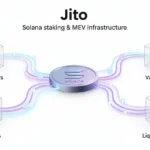
An alternative to native staking is liquid staking. Platforms like Marinade Finance and Jito accept SOL deposits and issue a liquid staking token in return. Marinade issues mSOL, Jito issues JitoSOL. These tokens represent your staked SOL plus accrued rewards and can be used in DeFi protocols while your SOL continues earning staking yield. Liquid staking accounts for roughly 13% of all staked SOL as of early 2026.
Network governance
SOL holders, through their validators, vote on protocol changes submitted as Solana Improvement Documents, known as SIMDs. Validators vote with the weight of stake delegated to them. Large stakers have proportionally more influence over which proposals pass.
The Alpenglow consensus upgrade, submitted as SIMD-0326, passed in September 2025 with 98.27% of participating stake voting in favour. Around 52% of all staked SOL cast a vote, which is high by blockchain governance standards.
Rent: the SOL balance every account must hold
Every account on Solana stores data on the network. Validators must keep that data in memory to process transactions. To compensate validators for this storage cost and to prevent the network from filling up with abandoned accounts, Solana requires every account to hold a minimum SOL balance proportional to its data size. This is called the rent-exempt minimum.
A basic SOL wallet with no extra data needs approximately 0.00089088 SOL (890,880 lamports) to stay active. A token account, which is a separate account created each time you hold a new SPL token, requires roughly 0.002 SOL. If an account’s balance falls below its rent-exempt threshold, the network can remove it from the ledger entirely.
This is why you cannot send every last SOL out of a wallet. The network will reject the transaction if it would leave the account below its minimum balance. The error message is typically InsufficientFundsForRent. You must either leave enough SOL to meet the threshold or close the account entirely and recover the full balance.
Rent is not a fee. It is a refundable deposit. If you close an account properly, you get that SOL back. Unused token accounts in a Solana wallet can be closed to recover their rent deposits, which adds up over time if you have interacted with many SPL tokens.
The practical consequence: if someone new to Solana buys exactly 1 SOL and tries to send all of it elsewhere, the transaction will fail. They need to keep at least 0.001 SOL in reserve. Wallets like Phantom handle this automatically by calculating the maximum sendable amount.
SOL tokenomics: supply, inflation, and the burn
As of March 2026, approximately 570 million SOL are in circulation. The total supply, including tokens that are staked or locked, sits around 621 million. Solana has no hard supply cap, which distinguishes it from Bitcoin’s fixed limit of 21 million.
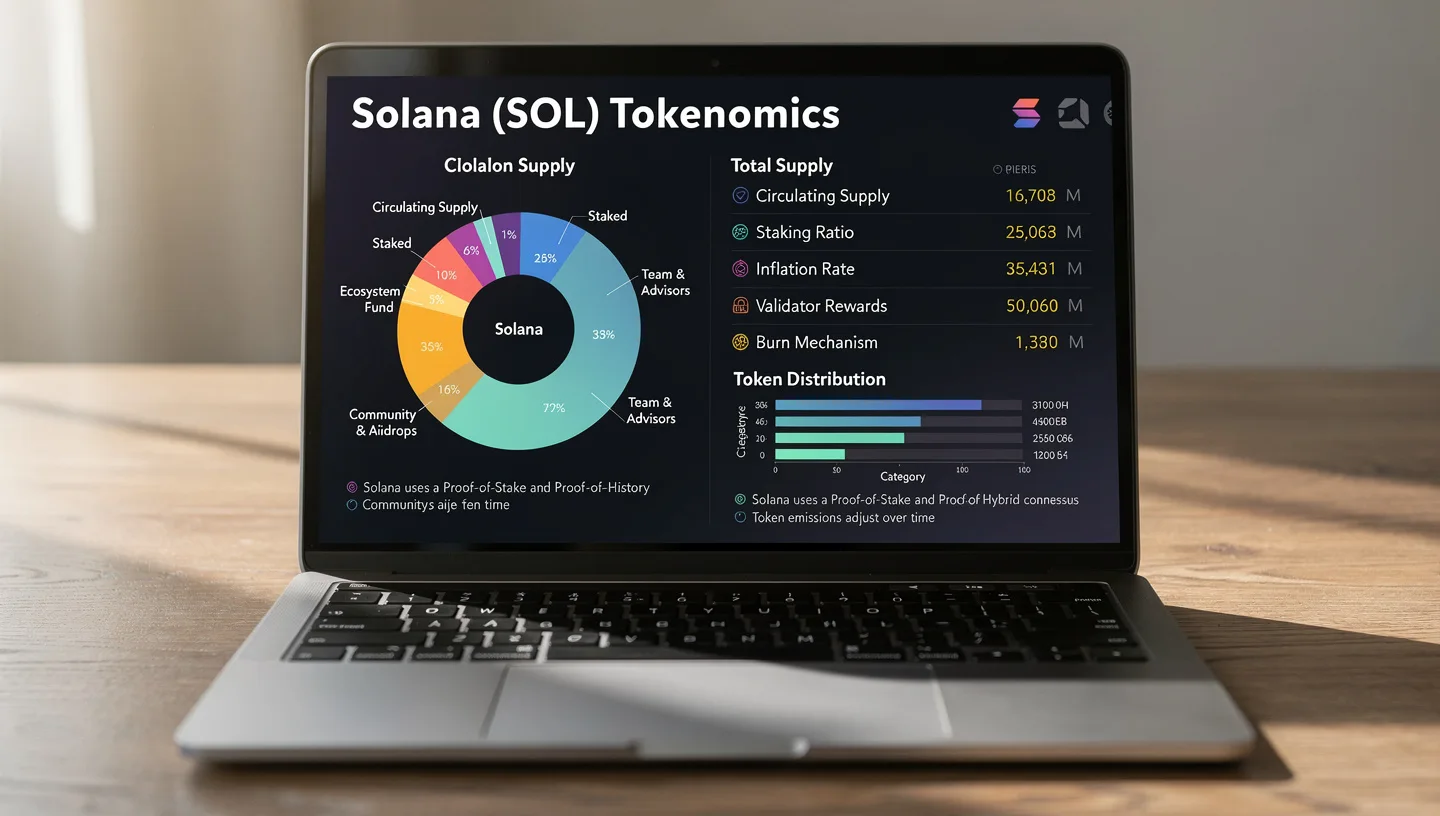
Instead, Solana uses a controlled inflation schedule. New SOL is issued each epoch to reward validators for staking. The inflation rate started at 8% annually at mainnet launch in 2020 and falls by 15% each year until it reaches a long-term floor of 1.5%, which the current schedule projects to reach around 2032.
As of early 2026, the annual inflation rate sits at approximately 4%. This means the network issues roughly 23 to 24 million new SOL per year at current supply levels.
The offsetting mechanism is the fee burn. Half of every transaction fee is destroyed permanently. During quiet periods, new issuance outpaces burning and the supply grows slowly. During high-activity periods, the burn can exceed new issuance and the supply shrinks. The memecoin activity of 2024 and early 2025 produced burn rates that briefly made SOL deflationary by a small margin. Whether SOL is net inflationary or net deflationary in any given month depends on how active the network is.
The fully diluted valuation (FDV) of SOL, which values all existing tokens at the current price, sits above $52 billion as of March 2026. The market cap based on circulating supply is lower. The gap reflects staked and foundation-held tokens that are not actively traded. The original token allocation at launch directed roughly 48% of initial supply to insiders: the founding team, investors, and the Solana Foundation. That concentration drew early criticism and still explains part of the difference between circulating supply and total supply.
SOL vs. other tokens on Solana: the SPL standard
The Solana Program Library, or SPL, is the set of on-chain programs that define how tokens are created, transferred, burned, and governed on Solana. Think of it as Solana’s equivalent of Ethereum’s ERC-20 standard, but designed for Solana’s parallel execution environment.

When a project launches a token on Solana, it uses the SPL token program to create it. That token follows SPL rules and lives in a dedicated token account in your wallet. The token account holds the balance of that specific SPL token. Your main wallet holds your SOL.
The key distinction for anyone using Solana day-to-day comes down to two different levels of the network.
SOL is a protocol-level asset. It is built into the network itself. Validators earn SOL. Fees are paid in SOL. Rent is held in SOL. No program can change this. SOL cannot be “paused” or “blacklisted” by any application.
SPL tokens are application-level assets. USDC on Solana is an SPL token controlled by Circle. BONK is an SPL token. JUP is an SPL token. Each of these tokens can have their own transfer rules, freeze authorities, or minting schedules set by the issuer. Circle, for example, holds the authority to freeze USDC accounts in certain jurisdictions. That authority exists because USDC is an SPL token with a freeze authority field set.
SOL has no issuer authority, no freeze authority, no blacklist.
A practical consequence: when you hold USDC on Solana, you need two things in your wallet. First, a token account for USDC (which costs roughly 0.002 SOL to create, paid as rent). Second, a small SOL balance to pay the fee when you move that USDC. If your wallet shows a USDC balance but zero SOL, you cannot send that USDC until you add SOL for fees.
SOL price history and market cap
SOL launched in March 2020 at under $1. Through 2020 and into early 2021, it traded below $5 with minimal activity.
The first major price run came in mid-2021, when SOL climbed from around $10 in January to an all-time high at the time of approximately $260 in November 2021. The catalyst was a combination of Ethereum fee congestion pushing developers and users toward Solana, an explosion of NFT activity, and FTX’s active promotion of the Solana ecosystem.
The FTX collapse in November 2022 hit SOL harder than most assets. SOL fell from around $35 before the collapse to below $10 within days. At its lowest point in late 2022, it traded near $8. At the time, many projects abandoned Solana and the network’s future was widely questioned.
Recovery came through 2023 and accelerated sharply in 2024 as the memecoin market on Solana drew enormous activity. SOL reached a new all-time high of $293 in January 2025, driven by the broader crypto market rally following the US presidential election in November 2024 and continued growth in Solana’s on-chain activity.
By March 2026, SOL trades around $85, roughly 70% below its January 2025 peak. Its market cap puts it among the top ten cryptocurrencies by size. The spot Solana ETFs that launched in October 2025 have brought additional institutional buying, though SOL’s price remains tightly correlated with the broader crypto market cycle.
Is SOL a security? The regulatory picture in 2026
In June 2023, the US Securities and Exchange Commission filed lawsuits against Coinbase and Binance that listed SOL among a group of tokens the SEC classified as unregistered securities. This caused Coinbase to briefly delist SOL in some markets, and Robinhood removed it from its platform as well.
The Solana Foundation disputed the classification and argued that SOL functions as a commodity, similar to how the CFTC has treated Ethereum.
The situation shifted in stages. In July 2024, the SEC dropped SOL from its list of alleged securities in the Binance case without providing a formal explanation. This was not an official ruling that SOL is not a security; it was a tactical withdrawal of one specific claim.
The clearest regulatory signal came in October 2025, when the SEC approved the first spot Solana ETFs. Exchange-traded products tracking spot prices of an asset cannot be approved by the SEC under existing rules if that asset is a security. The approval was a de facto acknowledgment that the SEC no longer treats SOL as a security, even without a formal statement to that effect.
As of March 2026, no US court or regulator has issued a binding ruling on SOL’s classification. The practical status is that SOL trades freely on major US exchanges, ETFs are approved and trading, and the SEC has not renewed its securities classification argument in any active proceeding. Formal clarity through legislation or a definitive court ruling has not yet arrived.
How to buy and store SOL
Coinbase, Kraken, and Binance all list SOL and are available in most countries. Buying SOL on an exchange takes a few minutes once an account is verified. The token can be left on the exchange or withdrawn to a self-custody wallet.
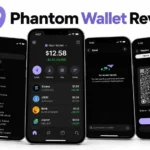
For self-custody, Phantom and Solflare are the two most widely used Solana wallets. Both support SOL, all SPL tokens, staking, and DeFi access directly from the wallet interface. For larger amounts, a hardware wallet such as Ledger keeps private keys offline and away from browser vulnerabilities.
SOL can also be held through a spot Solana ETF in a standard brokerage or retirement account. This avoids the need to manage a wallet or private keys, but the holder does not own SOL directly and cannot use it on the network. Current ETFs trading in the US include products from Bitwise, Fidelity, and 21Shares, with several others launched or pending as of early 2026.
For a full overview of the network itself, see our guide on what is Solana.
Frequently asked questions
Is SOL the same as Solana?
No. Solana is the blockchain network. SOL is the cryptocurrency that runs on it. Solana is the infrastructure. SOL is the currency used to pay for everything that happens on that infrastructure. Other tokens like USDC and BONK also run on Solana, but they are SPL tokens, not SOL.
What is SOL used for?
SOL pays transaction fees for every action on the Solana network, including sending SOL itself, sending SPL tokens, swapping on a DEX, minting NFTs, or deploying a program. It is also used for staking to earn rewards, for governance voting on protocol changes, and must be held in every wallet as a rent-exempt minimum to keep accounts active.
What are lamports?
Lamports are the smallest unit of SOL. One SOL equals 1,000,000,000 lamports (one billion). The name comes from Leslie Lamport, the computer scientist whose work on distributed systems underpins much of how blockchains handle ordering and consensus. Transaction fees are expressed in lamports because they are too small to express in full SOL units.
How many SOL tokens exist?
As of March 2026, approximately 570 million SOL are in circulation. The total supply including staked and locked tokens is around 621 million. Solana has no hard maximum supply. New SOL is issued each epoch as staking rewards, at an inflation rate of roughly 4% annually that continues to fall by 15% each year.
Is SOL inflationary or deflationary?
Both, depending on network activity. The base inflation rate produces new SOL continuously. At the same time, 50% of every transaction fee is burned. When the network is busy, the burn rate can exceed new issuance and SOL becomes net deflationary. When the network is quiet, new issuance outpaces burning. Through 2024 and into early 2025, high memecoin activity made SOL briefly deflationary. By early 2026, at lower activity levels, it is mildly inflationary.
What is rent on Solana?
Rent is a minimum SOL balance that every Solana account must hold to remain active on the network. It is not a recurring fee. It is a refundable deposit held in the account to compensate validators for storing that account’s data in memory. A basic SOL wallet requires approximately 0.00089 SOL. Each SPL token account requires roughly 0.002 SOL. If a transaction would drop an account below its rent-exempt threshold, the network rejects it with an InsufficientFundsForRent error. Closing unused token accounts recovers this deposit.
Can you stake SOL?
Yes. You delegate SOL to a validator through any Solana wallet, including Phantom and Solflare. You keep ownership of your SOL. The validator uses the delegated weight in consensus and passes a portion of its rewards back to you. Annual yields currently sit around 5 to 6%. Unstaking takes up to two days, tied to the epoch boundary. Slashing is not currently active on Solana mainnet, so delegators do not risk losing their principal to automated penalties.
What is the difference between SOL and SPL tokens?
SOL is the protocol-level asset, built into the Solana network itself. SPL tokens are application-level assets created by third parties using the Solana Program Library token standard. USDC, BONK, JUP, and WIF are all SPL tokens. SOL pays the fees for every transaction, including transactions involving SPL tokens. SPL tokens cannot pay their own fees. SOL has no issuer authority or freeze mechanism. SPL tokens may have both, depending on how the issuer configured them at creation.
Is SOL a security?
No US court or regulator has issued a binding ruling on this. The SEC named SOL as an alleged unregistered security in its 2023 lawsuits against Coinbase and Binance, but dropped that claim from the Binance case in 2024. In October 2025, the SEC approved spot Solana ETFs, which are only permissible for assets the SEC does not classify as securities. This effectively ended the securities argument in practice, though no formal ruling has been issued. SOL trades freely on major US exchanges as of March 2026.
What is the SOL all-time high?
SOL reached its all-time high of $293 in January 2025, during the post-election crypto market rally. Its previous cycle high was approximately $260 in November 2021. By March 2026, SOL trades around $85, roughly 70% below the January 2025 peak.