You can buy Solana without KYC through several routes, none of which require uploading a passport or going through identity verification. The most reliable options are non-custodial instant swap services that exchange another crypto for SOL and send it straight to your wallet, and decentralized exchanges on Solana where you trade directly from your wallet using a DEX and no account. Both methods let you keep your private keys and avoid sharing personal data with any centralized platform. This guide covers every available method, the platforms that support them, and the real risks you need to understand before using any of them.
Why People Buy Solana Without KYC
Most people who want to buy Solana without KYC are not trying to hide illegal activity. The reasons are more straightforward: protecting personal data, avoiding delays, and maintaining financial privacy in a space that was built around it.
Every time you complete KYC on a centralized exchange, you upload a government ID, a selfie, sometimes proof of address, and sometimes biometric data. That information sits in a centralized database. These databases are frequent targets for hackers. Several major exchanges have suffered data breaches that exposed the personal information of millions of users, including home addresses and ID documents. Guardarian, one of the no-verification platforms that ranks for this search, explicitly names this “wrench attack” risk: when someone knows you hold significant crypto and also knows your home address from a breached exchange database, you become a physical target.
Beyond security, KYC processes at large exchanges can take hours or days, involve document rejections, and are blocked entirely in certain countries. For smaller purchases, many users find the friction disproportionate to what they are buying. Geographic restrictions affect which exchanges accept users from certain countries or US states, while non-custodial tools are often accessible from a broader range of locations. The principle behind it all is familiar: “not your keys, not your crypto.” Non-custodial tools reinforce that principle from the first step.
AML regulations push exchanges to collect this data under law. Decentralized alternatives operate on smart contracts rather than corporate compliance departments, which is why they do not collect it. Both models are legal in most jurisdictions for ordinary users making ordinary purchases, though the regulatory line shifts depending on where you live and how much you buy.
To understand what SOL actually is and why its speed and low fees make it a practical asset to hold, our overview of what SOL is covers the token’s function within the network.
What Is KYC and Why Do Exchanges Require It?
KYC stands for Know Your Customer. It is a set of identity verification procedures that financial institutions are legally required to perform under AML, or anti-money laundering, regulations. For crypto exchanges, this typically means collecting your full name, date of birth, home address, a government ID such as a passport or driver’s license, and in many cases a live selfie or video check.
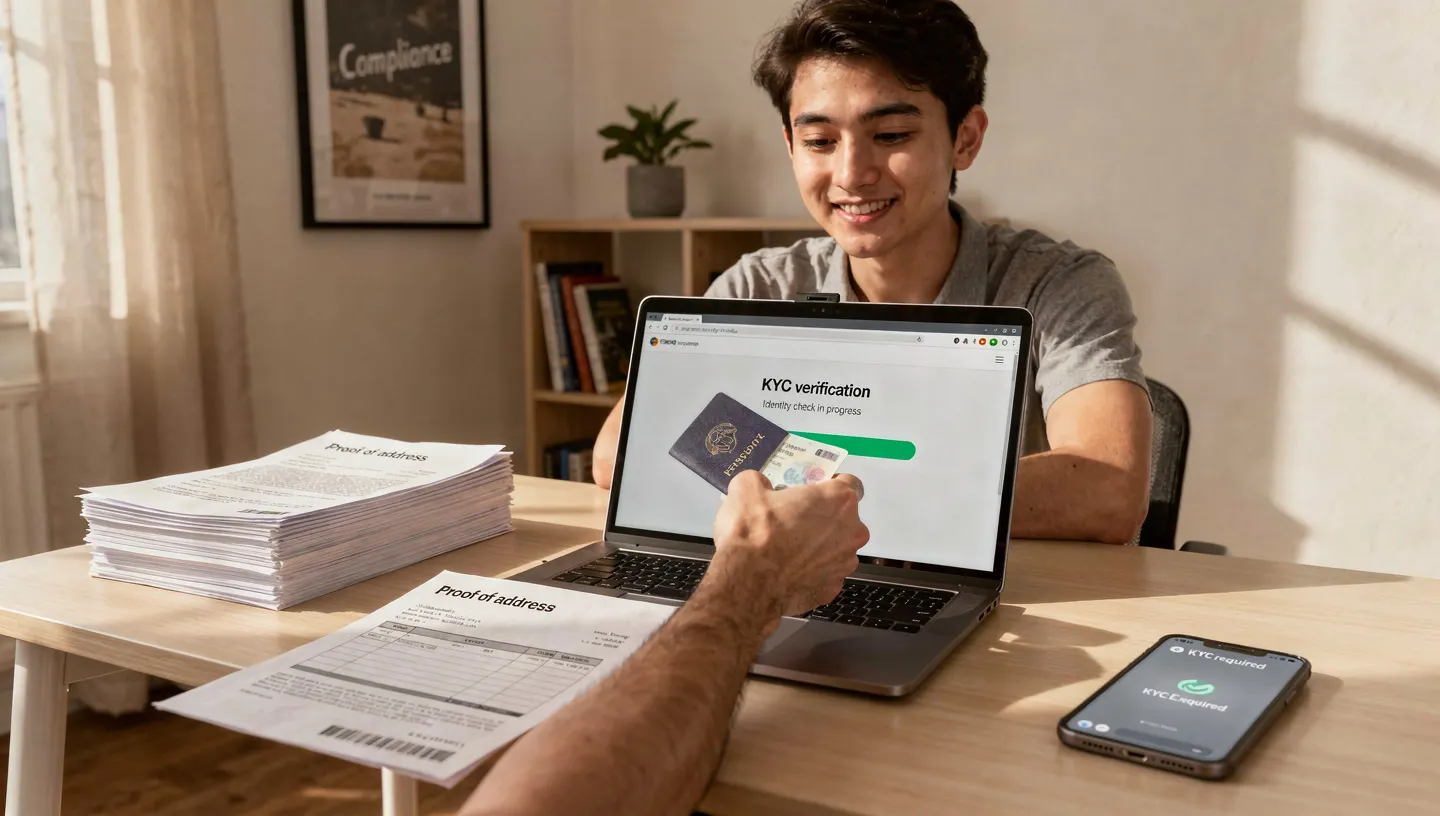
Once collected, this data is tied to your account and can be shared with regulators, law enforcement, or payment processors on request. Under the EU’s MiCA framework, which took full effect in late 2024, all VASP registered platforms operating in Europe must apply these checks. The US Genius Act, signed into law in 2025, extended similar requirements to stablecoin issuers and a broader set of crypto service providers. The combined effect is that mainstream centralized exchanges have almost universally tightened their KYC requirements in 2025 and 2026.
The result: anyone who wants to buy SOL on Binance, Coinbase, or Kraken will go through full verification before making their first purchase. There are no exceptions for small amounts on these platforms.
Custodial vs Non-Custodial: What the Difference Means for Privacy
A custodial platform holds your funds on your behalf. You log in with an email and password, but the platform controls the private keys. Centralized exchanges are almost always custodial. If the platform freezes withdrawals, gets hacked, or goes under, your funds are caught in it.
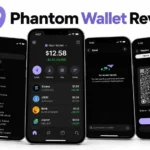
A non-custodial platform never holds your funds. When you use a DEX or an instant swap service that is non-custodial, you connect a wallet you control, such as Phantom Wallet or Solflare, and every transaction is signed by you. The platform processes the swap but never has access to your assets. This is why non-custodial tools require no account and no KYC: there is nothing for the platform to secure on your behalf and no regulatory trigger that kicks in the way it does when a company holds customer funds. The principle is direct: “not your keys, not your crypto.”
Understanding the smart contracts that power non-custodial DEXs on Solana helps when assessing which platforms to trust. Our guide on Solana smart contracts explains how these programs are deployed and what auditing means in practice.
Methods to Buy Solana Without KYC
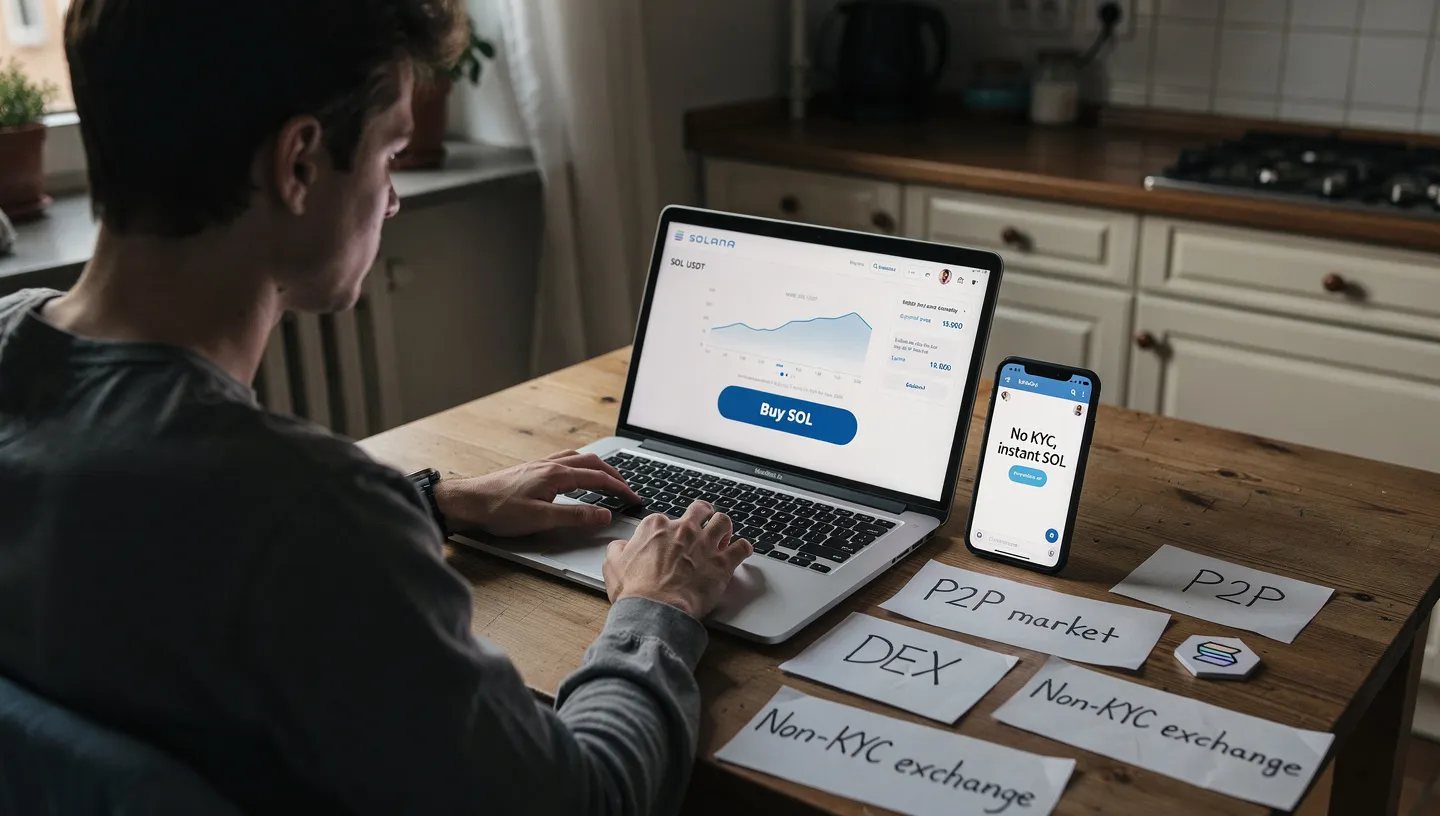
There is no single method that fits every situation for buying Solana without KYC. The right choice depends on what you already hold, where you are, and how much you want to buy. Broadly, there are four categories:
- Non-custodial instant swap services – swap BTC, ETH, or USDT for SOL directly to your wallet with no account or registration. Best for users who already hold crypto.
- Solana DEXs – trade directly from your wallet on Jupiter or Raydium using tokens already on the Solana network. Requires having SOL or USDC on Solana first.
- Low-KYC fiat on-ramps – buy SOL with a card or bank transfer up to a set limit without full verification. Useful for smaller first purchases with fiat.
- P2P and OTC trades – buy directly from another person. Highest privacy, highest counterparty risk.
Method 1: Non-Custodial Instant Swap Services
Non-custodial swap platforms are the most practical route for users who already hold any major cryptocurrency. The flow is simple: you choose the asset you want to send, enter your Solana wallet address as the destination, send the funds to a deposit address the platform provides, and receive SOL in your wallet minutes later. No account, no registration, no identity check. The platform earns a swap fee built into the exchange rate.
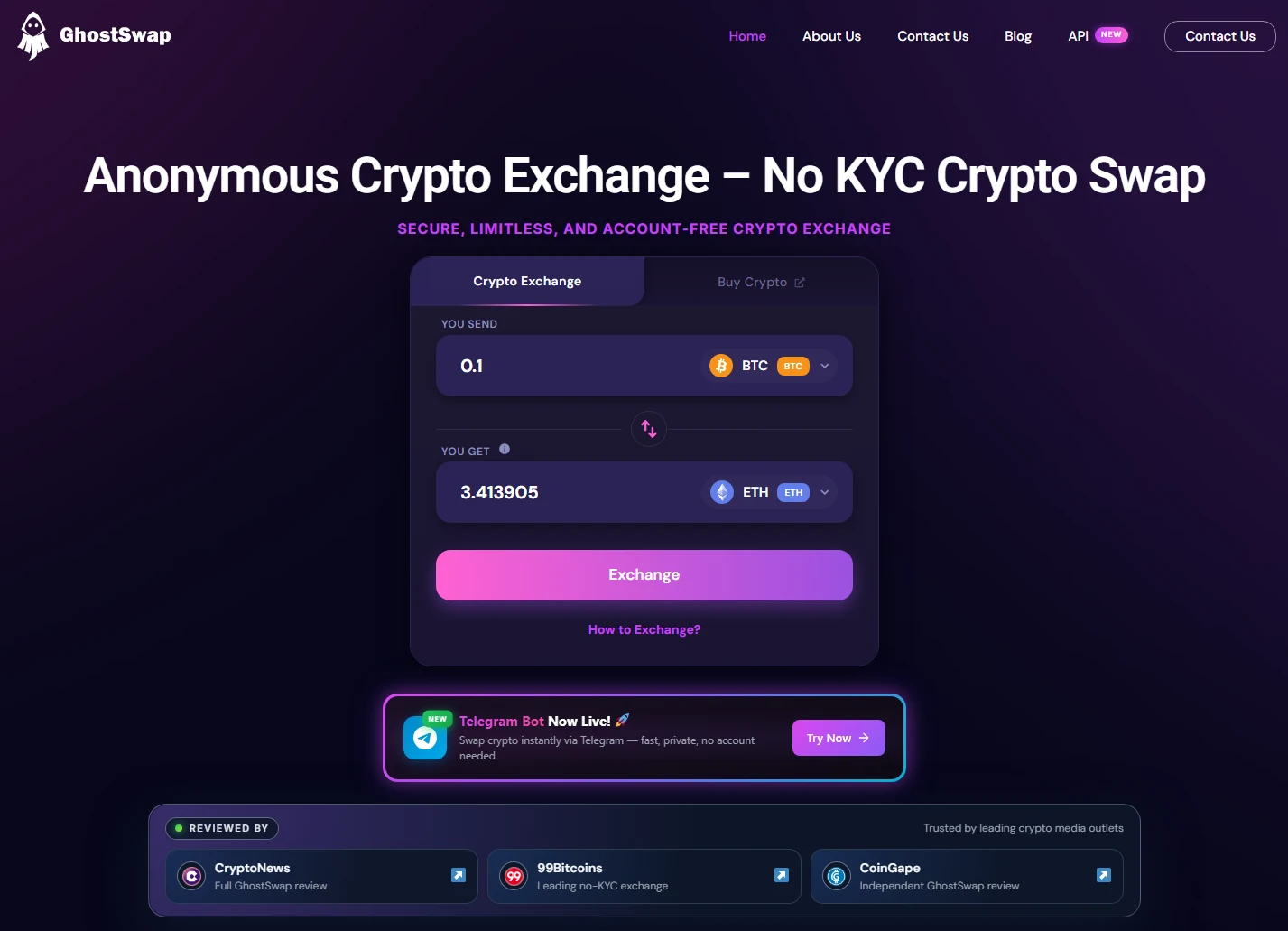
These services typically support BTC to SOL, ETH to SOL, USDT to SOL, and hundreds of other pairs. The main trade-off compared to centralized exchanges is a slightly wider spread and occasionally slower completion times depending on the source blockchain’s confirmation speed. For Bitcoin, expect 10 to 60 minutes. For Ethereum, typically 5 to 15 minutes. For USDT on Tron or USDC on Solana, usually under 5 minutes.
The platforms below are the most cited across rankajući members of the space for this specific use case:
| Platform | No-KYC Limit | Swap Pairs | Fee | Fiat Support | Best For |
|---|---|---|---|---|---|
| GhostSwap | No stated limit | 1,500+ | ~0.5-1% spread | No | Private crypto-to-crypto swaps |
| Chainflip | No stated limit | Major chains | ~0.1-0.3% | No | Decentralized cross-chain swaps |
| StealthEX | Under $700 | 1,500+ | ~0.5-1% | Limited | No-verification swaps up to $700 |
GhostSwap
GhostSwap is a non-custodial swap service built around privacy. It supports over 1,500 trading pairs including BTC to SOL, requires no account creation, and sends SOL directly to the wallet address you provide at the start of the swap. There is no email, no username, and no verification step at any point in the process. The fee is built into the exchange rate and displayed before you confirm. GhostSwap also publishes its own guides on buying SOL without KYC, which makes it one of the most transparent services in this category about how its own model works.
Chainflip
Chainflip is a decentralized cross-chain swap protocol. Instead of a company routing your swap, the trade settles through a decentralized network of validators and a liquidity pool system. This means there is no custodian at any point in the ETH to SOL swap. The protocol charges a low fee relative to centralized services and has no KYC requirement because there is no company to apply one. The trade-off is that supported chains are limited to major networks. Chainflip does not support as many obscure tokens as swap aggregators, but for ETH, BTC, USDC, and USDT into SOL, it is one of the most genuinely decentralized options available.
StealthEX
StealthEX supports over 1,500 assets with no verification required for amounts under $700. The swap is fully non-custodial: enter your SOL wallet address, choose what you are sending, confirm, and receive SOL. For amounts above the limit, StealthEX may request verification, so it is most useful for moderate purchases where the no-KYC threshold covers the full amount. The fee structure is competitive and clearly displayed before each swap confirms.
Method 2: Decentralized Exchanges on Solana
On-chain DEXs on Solana let you trade directly from your wallet using smart contracts with no account and no registration. There is no company collecting your data because there is no company operating the trade. You connect wallet to the DEX’s web interface, select the tokens you want to swap, and confirm the transaction in your wallet. The swap settles on-chain in under a second.
The limitation of this method for new users is that you need to already have tokens on the Solana network before you can use a Solana DEX. If you are starting from BTC or ETH on another chain, you need a bridge or non-custodial swap service to get funds onto Solana first. Once you have USDC on Solana or any other SPL token, DEX trading is the most seamless and most private on-chain option available.
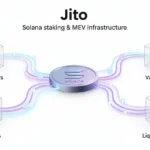
Jupiter and Raydium are the two most relevant platforms here. Both are fully non-custodial, both are audited, and together they handle the majority of all SOL trading volume on-chain.
How to Use Jupiter to Get SOL Without KYC
Jupiter is the leading DEX aggregator on Solana. Go to jup.ag and click Connect Wallet. Select Phantom Wallet from the list and approve the connection. In the top field of the swap interface, select the token you want to sell, for example USDC. In the bottom field, select SOL. Enter the amount.
Jupiter routes the trade automatically through whichever DEX pool gives the best rate. Check the slippage tolerance and price impact before confirming. Click Swap and approve in your wallet. The SOL appears in your balance within seconds. There is no account required at any point and no KYC of any kind. Jupiter charges zero platform fees on standard swaps. You pay only the underlying pool fee, typically 0.25%, plus the Solana network fee of fractions of a cent.
Our guide on how to use Solana DeFi covers Jupiter, Raydium, and Orca in detail, including how routing works and what to watch for on each platform.
How to Use Raydium to Get SOL Without KYC
Raydium is the largest AMM on Solana by total value locked. Go to raydium.io and connect wallet. The swap interface loads immediately. Select the token you want to sell in the top field, select SOL as the output, enter the amount, and confirm in your wallet.
Raydium routes swaps through its own liquidity pools, which are among the deepest on the network for most major token pairs. Like Jupiter, there is no KYC, no account creation, and no verification step. The only thing the platform needs is a wallet signature for each transaction. Raydium is particularly useful for tokens that have just launched on Solana and may not yet have wide coverage across Jupiter’s routing, though Jupiter’s aggregator typically routes through Raydium pools anyway for the best-priced trades.
Because Solana’s fees are so low, using either platform for a swap costs almost nothing. Our guide on Solana transaction fees explains how priority fees work and what the network charge structure looks like during periods of high demand.
Method 3: Low-KYC Fiat On-Ramps
For users who want to convert fiat directly to SOL without going through a full-KYC centralized exchange, several platforms operate a low KYC model that allows purchases up to a set limit without uploading identity documents. These are fiat on-ramps rather than DEXs, meaning you pay with a card or bank transfer and receive SOL in your wallet.
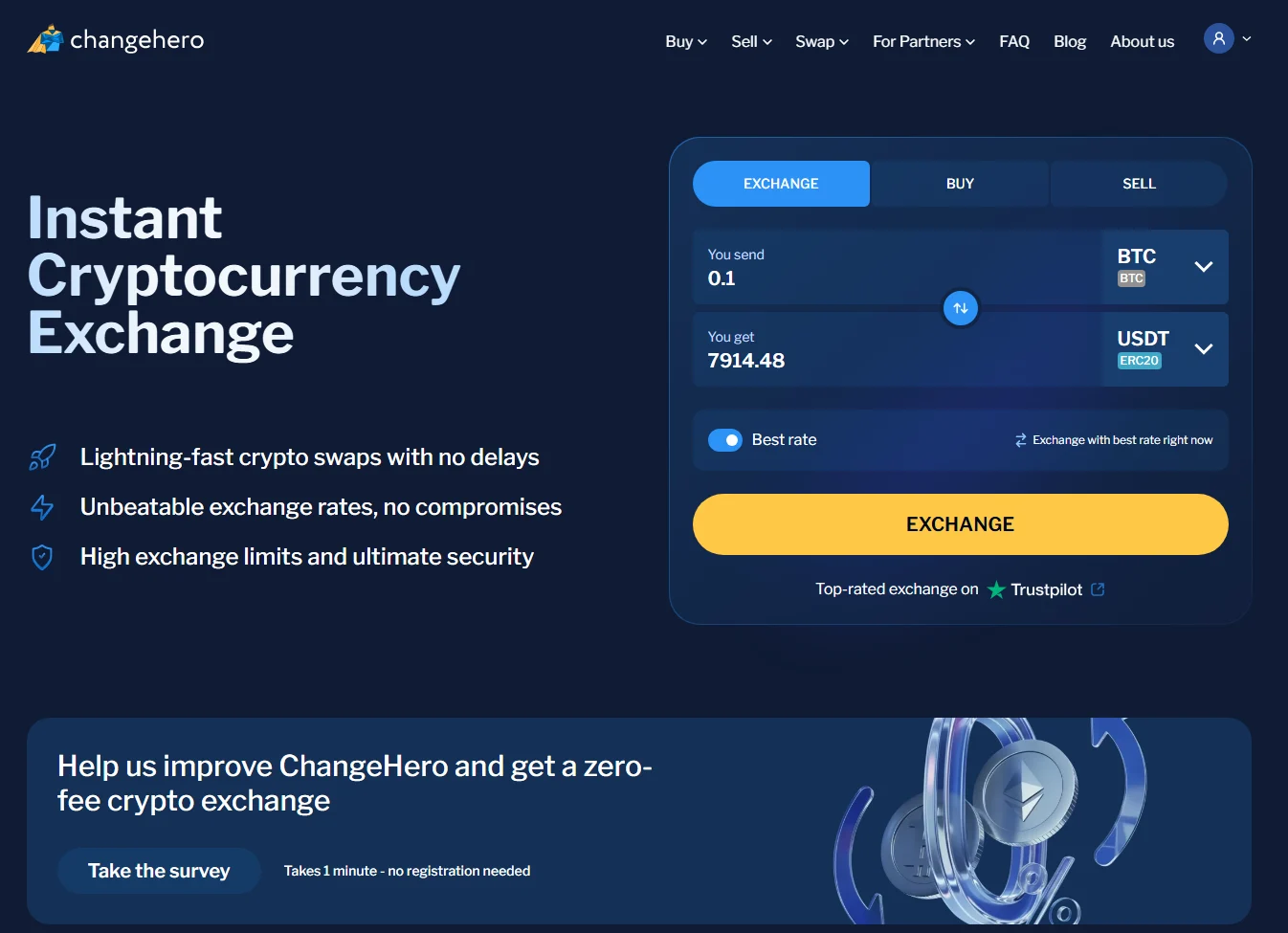
The no KYC threshold varies by platform and jurisdiction. ChangeHero allows purchases up to €700 without identity verification. Changelly permits purchases with no verification for amounts under $150, with a brief check required above that. Guardarian uses a low-KYC model based on email access rather than ID documents, covering 170+ countries and 30+ currencies including USD, EUR, and GBP. Paybis allows up to $1,000 without KYC for PayPal and card purchases in supported regions.
| Platform | No-KYC Limit | Payment Methods | Fee | Regions |
|---|---|---|---|---|
| ChangeHero | Up to €700 | Card, Apple Pay, Google Pay, Revolut Pay | ~1-2% | Europe, global |
| Changelly | Under $150 | Card, Apple Pay, Google Pay | ~2-3% | Global (170+ countries) |
| Guardarian | Low KYC (email only) | Card, Apple Pay, Google Pay, SEPA, PIX | ~1-2% | 170+ countries |
| Paybis | Up to $1,000 | Card, PayPal, bank transfer | ~1-2% | US, EU, UK, 180+ countries |
These platforms all deliver SOL directly to a wallet address you provide at checkout. None of them hold your SOL in a custodial account. You specify your Solana address before paying and the tokens arrive in your wallet once the payment settles. The transaction limit is the main constraint. For anyone buying more than €700 worth of SOL at once without KYC, a non-custodial swap service using existing crypto is the more practical route.
A credit card without KYC purchase on ChangeHero or a debit card without KYC purchase on Changelly is one of the few ways to convert fresh fiat directly to SOL without a full identity check, making these platforms relevant for users who do not yet hold any crypto to start a swap from. Note that Apple Pay and Google Pay purchases trigger the same anti-fraud checks as card payments on most of these platforms, so availability depends on your card issuer’s own policies in addition to the platform’s limits.
Method 4: P2P Platforms and OTC Trades
P2P, or peer-to-peer, trading connects buyers and sellers directly. On dedicated P2P platforms you find a seller who has SOL, agree on a price, and the platform holds the crypto in escrow while you send payment. Once the seller confirms receipt, the escrow releases the SOL to your wallet. No company holds your funds beyond the brief escrow window during the trade itself.
HodlHodl is the most referenced P2P platform for privacy-conscious users. It uses a multi-signature escrow system, does not require KYC for standard trades, and focuses primarily on Bitcoin. To get SOL from HodlHodl, you buy BTC first and then swap it for SOL using a non-custodial swap service. LocalCryptos operates a similar model and supports Ethereum-based assets with no mandatory verification for most trades.
For occasional small purchases, P2P works. For ongoing buying, the friction is high and the counterparty risk is real. Always use platforms with an established escrow system and never send payment outside of it. Sending money directly to a stranger without escrow protection has a reliable outcome: you lose the money and receive no SOL. The OTC model, buying directly from individuals through informal channels, carries even higher risk and is not recommended unless you are dealing with someone you know and trust in person.
How to Buy Solana Without KYC: Step by Step
The process below covers the non-custodial instant swap route, which works for most users who already hold any major cryptocurrency. This is the most reliable way to buy Solana without KYC regardless of where you are located. If you are starting from fiat only, use a low-KYC fiat on-ramp from the table above for your first purchase, then use this flow for subsequent buys once you hold crypto.
Step 1: Set Up a Non-Custodial Solana Wallet
Before buying SOL through any no-KYC method, you need a wallet that you control. Phantom Wallet is the most widely used option and works as a browser extension on Chrome, Firefox, Brave, and Edge, and as a mobile app on iOS and Android. Solflare is a strong alternative with more detailed staking controls. Backpack is a newer option popular with active Solana users.
Download from the official website only. After installation, create a new wallet and write down your seed phrase on paper, word by word, in the correct order. This recovery phrase is the only backup for your wallet. Store it offline in a location only you can access. Never photograph it or type it into any website. Your private keys are derived from this phrase. Whoever has the phrase controls the wallet. Once written down, locate your SOL receiving address inside the wallet and copy it. You will need this in the next steps.
Our step-by-step guide on how to set up Phantom Wallet covers the full installation and backup process in detail.
Step 2: Acquire a Starting Crypto Asset
Non-custodial swaps are crypto-to-crypto. You need to already hold a coin or token to send. The most common starting assets for a BTC to SOL swap are Bitcoin, Ethereum, USDT, or USDC. If you hold any of these on any exchange or wallet, you can use them as the starting point.
If you do not yet hold any crypto, a low KYC fiat on-ramp like ChangeHero or Guardarian handles the fiat-to-SOL conversion directly without requiring full identity verification up to the platform’s limit. After that first purchase, subsequent buys can use the non-custodial swap route with no account setup at all.
Step 3: Choose a Non-Custodial Swap Platform
Go to GhostSwap, Chainflip, or StealthEX directly. Check the current exchange rate and the estimated SOL you will receive for the amount you want to send. Compare the spread across two or three platforms before committing. On a $500 swap the difference in swap fee between platforms can be $5 to $15.
Check the transaction limit for your chosen platform before starting. If you want to swap more than the no KYC threshold, either split the swap into smaller amounts on different days or use a platform with a higher or unstated limit. Verify the URL carefully before entering any wallet address. Phishing clones of popular swap services appear regularly in paid search results.
Step 4: Configure and Send the Swap
On the swap platform, select the asset you are sending in the first field and SOL in the second. Enter the amount. Paste your Solana wallet address as the destination. Review the estimated output and the swap fee. Also check the network fee for sending your source asset, which is separate from the swap platform’s charge and paid to the source blockchain’s validators.
Once you confirm, the platform provides a deposit address for the asset you are sending. Send exactly the specified amount from your wallet or exchange to that address. Double-check every character of the Solana wallet address you entered before sending. Blockchain transactions are irreversible. A wrong address means the funds go to an inaccessible location with no way to recover them.
Step 5: Verify Receipt of SOL
Once the source chain confirms your transaction, the swap platform processes the exchange and sends SOL to your wallet. Open your non-custodial wallet and check the balance. If the funds have not arrived after the expected completion window, check the transaction status using Solscan, Solana’s block explorer. Enter your wallet address in the search bar and look for an incoming transaction. If the swap is still processing, wait for the source chain to reach the required number of confirmations before assuming something went wrong.
Once the SOL appears in your wallet, it is yours. No platform has access to it. The transaction is settled and final on-chain.
Risks of Buying Solana Without KYC
No-KYC methods reduce one set of risks, primarily data exposure and exchange counterparty risk, while introducing others. Understanding both sides matters before you commit funds.
- Scam platforms and phishing: Fake versions of GhostSwap, StealthEX, and other no-KYC services are common in search results and social media ads. These sites are designed to take your funds and send nothing. Always verify the URL, check for HTTPS, and never click swap service links from unsolicited messages. Bookmark official URLs before you need them.
- Counterparty risk on P2P: P2P trades without proper escrow protection have a high scam rate. Sellers disappear after receiving payment, or buyers claim chargebacks on reversible payment methods like PayPal after receiving crypto. Only use P2P platforms with established multi-sig escrow and only deal within the platform’s protected system.
- Limited fiat access: Most no-KYC routes require existing crypto. Fiat on-ramps that skip verification cap purchases at amounts that may not meet your needs. Above those transaction limits, a full-KYC exchange is the only straightforward fiat route.
- Higher fees and spread: Non-custodial swap services and low-KYC on-ramps typically charge a wider spread than fully regulated exchanges. On small purchases this is negligible. On larger amounts it becomes meaningful and worth comparing across platforms before executing.
- Tax obligations remain: Buying SOL without KYC does not exempt you from reporting gains. In most jurisdictions, crypto is taxable when sold or exchanged. The absence of a KYC paper trail on the purchase side does not remove tax obligations that exist under your local law.
- Irreversible errors: Without a customer support team that knows who you are, mistakes are harder to resolve. A wrong wallet address, a failed swap, or sending the wrong asset are all situations where non-custodial services offer limited recourse. Verify every address twice before sending.
Is Buying Solana Without KYC Legal?
In most countries, yes. Using a non-custodial swap service or a Solana DEX to buy Solana without KYC is legal for ordinary users making ordinary purchases in most jurisdictions. The activity becomes legally relevant when it involves tax evasion, sanctions violations, or proceeds from criminal activity, none of which are specific to the no-KYC format.
The regulatory context in 2026 is more specific than it was two years ago. The EU’s MiCA framework requires all VASP registered platforms operating in Europe to apply KYC. This affects centralized exchanges and registered on-ramp services operating within the EU. It does not directly regulate individuals using DEXs or non-custodial swap tools for their own purchases. The US Genius Act focuses primarily on stablecoin issuers and a defined set of crypto intermediaries. Individuals buying SOL through a DEX are not classified as the regulated entity.
However, tax obligations apply regardless of how you buy. In the US, UK, EU, and most other major markets, crypto is a taxable asset. Selling SOL for profit triggers capital gains tax in most places. Swapping one crypto for another is also typically a taxable event. The absence of a KYC record on the purchase does not change this. Your wallet address and all transactions are public on the Solana blockchain. A tax authority with on-chain analytics tools can trace activity even without a platform’s KYC database. Reporting your gains is your responsibility regardless of the method used to buy.
If you are unsure how the rules apply in your jurisdiction, consult a qualified tax professional before making significant purchases. Nothing in this guide is legal or tax advice.
The underlying architecture of the Solana network that makes decentralized trading possible is explained in our guide on how Solana works, which covers validator consensus and how transactions are processed without a central authority.
Security Tips for No-KYC SOL Purchases
Buying SOL without verification puts more responsibility on you. There is no support team that knows your identity, no recovery process if you send to the wrong address, and no insurance on the swap. These habits reduce the most common failure points.
- Verify every URL before connecting or sending funds. Phishing clones of GhostSwap, StealthEX, Chainflip, and DEX interfaces appear regularly in paid search results. The correct URL looks identical to the fake at a glance. Bookmark the real sites the first time you find them and use bookmarks every time after.
- Keep your seed phrase offline and in two locations. Write your seed phrase on paper. Store one copy at home and one in a separate secure location. Never photograph it, never type it into any website, and never store it digitally in any form.
- Use a fresh wallet address for privacy-sensitive purchases. Blockchain transactions are public. If you use the same wallet address for a no-KYC swap and a KYC exchange, the on-chain trail links the two. Creating a separate wallet for no-KYC activity and then moving funds to your main wallet afterward adds a layer of separation.
- Stay within published limits to avoid unexpected verification requests. Many no-KYC swap platforms reserve the right to request verification for unusually large or suspicious transactions. Staying within the stated transaction limit reduces this risk.
- Compare spread and fees across at least two platforms before each swap. The difference in spread between platforms can be 0.5% to 1.5% on the same pair. On a $1,000 swap, that is $5 to $15 left on the table.
- Enable 2FA on any exchange you use to hold starting crypto. Even if the swap itself is non-custodial, if your source funds sit on an exchange while you set up the swap, that account needs strong access controls. Use an authenticator app, not SMS.
- For large holdings, use a hardware wallet. A Ledger or Trezor keeps your private keys offline. Even if your computer is compromised, keys stored on a hardware device cannot be extracted remotely. Pair it with Phantom or Solflare for full Solana access while keeping keys in cold storage.
What to Do With SOL After Buying Without KYC
Once your SOL arrives in your non-custodial wallet, the options are the same as for any SOL holder. The absence of KYC on the purchase side does not restrict what you can do with the asset after.
The most straightforward move is simply holding it in Phantom Wallet and earning staking SOL rewards by delegating to a validator. Current yields on Solana run between 6% and 8% APY. Your SOL stays in your wallet throughout and the delegation process requires no KYC of any kind. Our full guide on how to buy Solana also covers the onboarding and setup context for new holders.
If you want to use your SOL actively, DeFi protocols on Solana are accessible from any non-custodial wallet without registration. Jupiter, Raydium, and Orca all let you swap, provide liquidity, and earn yield directly from a connected wallet. For larger balances you plan to hold long-term, moving SOL to a hardware wallet for cold storage is worth the extra step.
When you eventually want to convert SOL back to fiat, the reverse process applies: you will need a KYC-verified exchange for fiat off-ramps in most jurisdictions. Our guide on how to sell Solana covers the withdrawal and sale process across the main platforms. If you need to move SOL between wallets before selling, our guide on how to transfer Solana covers the sending and receiving process in full.
Buying Solana Without KYC: FAQs
Is Buying SOL Without KYC Legal?
In most jurisdictions, yes. Using a non-custodial swap service or a Solana DEX to buy SOL without KYC is legal for ordinary purchases in most countries. The activity becomes a legal issue when it involves evading taxes, violating sanctions, or laundering criminal proceeds, none of which are specific to the no-KYC format. Your tax obligations remain regardless of how you buy. Check the rules in your jurisdiction before making significant purchases.
What Is the Safest Way to Buy Solana Without KYC?
The safest route is a reputable non-custodial swap service with a track record and published security practices, combined with a non-custodial wallet where you hold the private keys. A Solana DEX like Jupiter is equally safe once you already have tokens on the Solana network. Both methods avoid trusting any third party with your funds beyond the seconds it takes to process the swap.
Can I Buy Solana With a Credit Card Without KYC?
Yes, up to a limit. ChangeHero allows card purchases up to €700 without identity verification. Changelly allows purchases under $150 without full KYC. Above these thresholds, verification is required. A credit card without KYC purchase on these platforms delivers SOL directly to your wallet address. For amounts above the no-KYC threshold, a non-custodial crypto-to-crypto swap is the better option.
What Is the No-KYC Limit for SOL Purchases?
It varies by platform. StealthEX and ChangeHero both operate with limits around $700 to €700 without verification. Paybis allows up to $1,000 without KYC for supported payment methods. GhostSwap and Chainflip do not state a specific transaction limit but reserve the right to request verification for unusually large or suspicious transactions. Crypto-to-crypto swaps through non-custodial services generally have higher or unstated limits compared to fiat on-ramps.
Do I Need an Account to Buy SOL Without KYC?
No account required on any of the non-custodial swap services listed in this guide. GhostSwap, Chainflip, and StealthEX all operate without user registration. You enter a wallet address, send funds to a deposit address, and receive SOL. No registration, no email, no password. Solana DEXs like Jupiter and Raydium also require no account. You connect a wallet and trade directly. The wallet itself is the only identity you need.
What Wallet Do I Need for No-KYC SOL Purchases?
Any non-custodial Solana wallet works. Phantom Wallet is the most widely used and connects directly to every major Solana DEX and non-custodial service. Solflare is a strong alternative with more detailed staking controls. Both are free, take under five minutes to set up, and store your private keys on your device rather than on any server. Write down your seed phrase when you create the wallet. That phrase is the only backup.
What Are the Tax Implications of Buying SOL Without KYC?
Buying SOL through a no-KYC platform does not exempt you from tax obligations. In most countries, crypto is a taxable asset. Selling SOL at a profit triggers capital gains tax. Swapping one crypto for another is also typically a taxable event. The absence of a KYC record at the point of purchase does not change your reporting responsibilities. Your jurisdiction determines the exact rules. Consult a tax professional if you are unsure how they apply to your situation. This guide does not provide tax advice.
Can I Buy Solana Without KYC in the US?
Yes, through non-custodial swap services and Solana DEXs. Buy Solana without KYC in the US by using GhostSwap, Chainflip, or StealthEX to swap BTC or ETH for SOL with no account required. Jupiter and Raydium are also accessible to US users without verification. The Genius Act as passed focuses on stablecoin issuers and registered intermediaries, not on individuals using self-custody wallets or DEXs for their own purchases. Standard tax reporting requirements still apply regardless of the purchase method.