SOL is trading around $93 as of March 2026 and sits among the top five cryptocurrencies by market cap. You can buy it in under ten minutes on most major exchanges, or get exposure through a traditional brokerage without ever opening a crypto account. This guide covers four ways to buy SOL, which exchanges charge the least, how to avoid the most common mistake beginners make when withdrawing, and what to do with your SOL once you have it.
The short answer: four ways to buy SOL in 2026
Most buyers use one of four routes depending on how much they want to spend and how involved they want to be with the process.
- Centralized exchange (CEX): The standard option for most people. Sign up, verify your identity, deposit, and buy. Coinbase, Kraken and Binance all support SOL. Fees range from $1 to $15 per $1,000 purchased depending on which exchange and which order type you use.
- Solana ETF: If you already use a brokerage account or want SOL inside an IRA, the VanEck VSOL and 21Shares TSOL ETFs trade on US stock exchanges. No crypto account required. This is the easiest route for traditional investors.
- Decentralized exchange (DEX): If you already have a Solana wallet and some USDC, you can swap directly on Jupiter without any account registration. Suitable for users who already understand wallets and self-custody.
- Traditional broker: Robinhood, Interactive Brokers, and Webull offer SOL trading for users who prefer a brokerage interface over a crypto exchange. Features and fees vary by platform.
The rest of this guide focuses on the centralized exchange route because it gives you the most flexibility and direct ownership of SOL. The ETF section covers the brokerage option in detail for those who prefer it.
Step-by-step: how to buy Solana on a centralized exchange
The process is the same across Coinbase, Kraken and Binance with minor differences in layout. These five steps apply to all three.
Step 1: choose an exchange and create an account
Go to the exchange website or download the app. Click “Sign up” and enter your email address. You will receive a confirmation link. The signup itself takes two minutes. Identity verification, covered in the next step, takes longer.
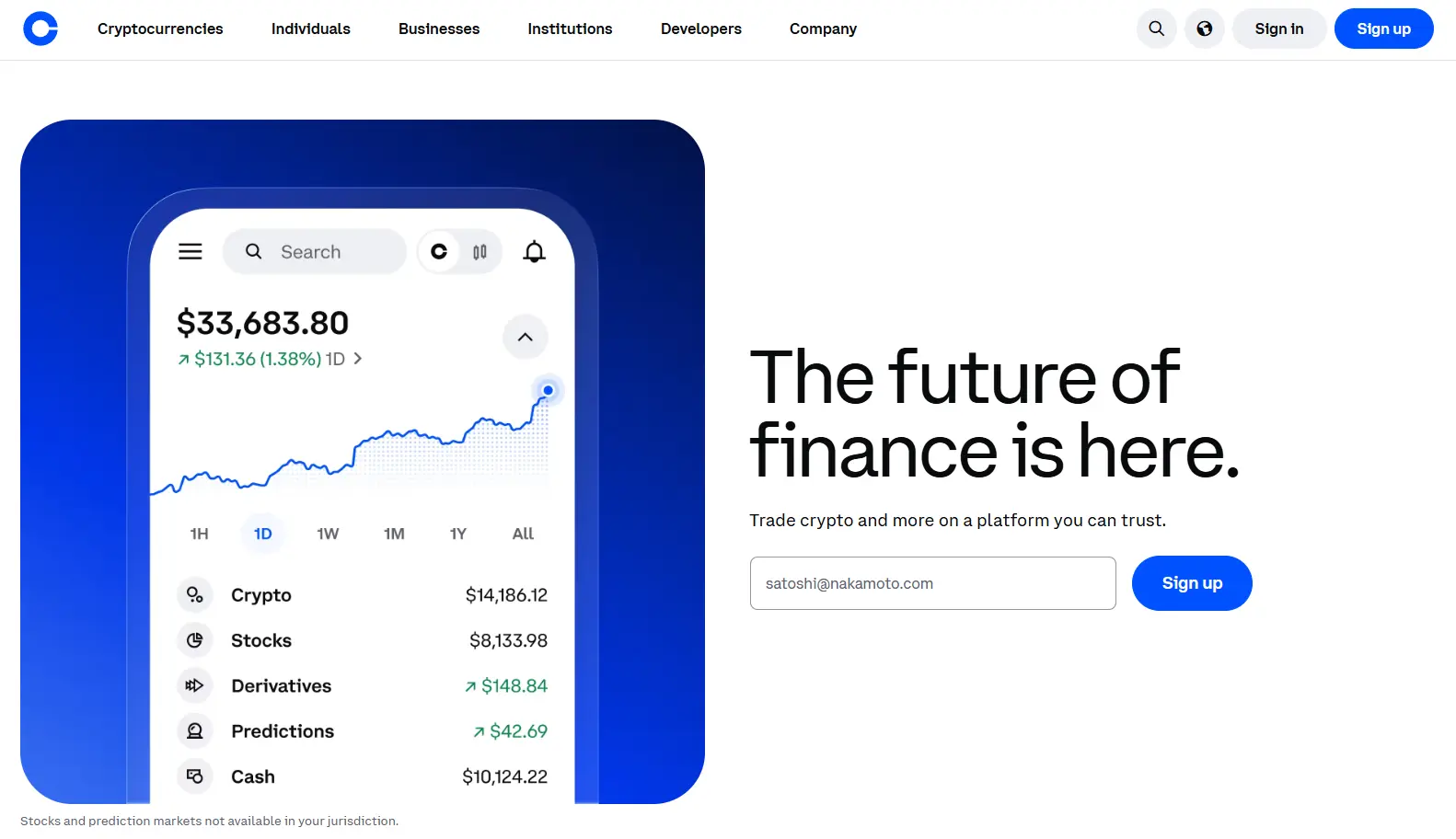
For beginners, Coinbase has the most straightforward interface. Kraken offers better fees with its Pro tier and is simple once set up. Binance has the lowest spot fees globally but is not available in all US states. All three are regulated, have long operating histories and support SOL withdrawals to external wallets.
For a broader view of what SOL is and why people buy it, the SOL token overview covers supply, staking and what drives its value.
Step 2: verify your identity
Every regulated exchange requires identity verification before you can deposit fiat currency or withdraw. This is a legal requirement called Know Your Customer (KYC) and applies across all jurisdictions.
You will need a government-issued photo ID (passport or driver’s license) and in most cases a selfie taken through the app. Coinbase and Kraken complete verification instantly for most users. Binance takes up to 24 hours in some cases.
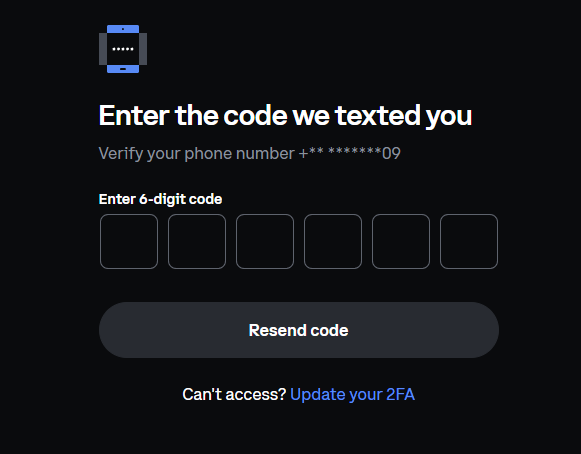
Before making any deposit, set up two-factor authentication (2FA). Use an authenticator app like Google Authenticator or Authy rather than SMS. SMS-based 2FA is vulnerable to SIM-swapping attacks. This takes three minutes and meaningfully reduces the risk of unauthorised access to your account.
Step 3: add a payment method and fund your account
The cheapest way to fund your account is a bank transfer. ACH transfers in the US are free on Coinbase and Kraken. SEPA transfers are free for European users. The trade-off is speed: bank transfers take one to three business days.
Debit card deposits are instant but cost 1.5% to 3.5% depending on the platform. On a $500 purchase, that is $7.50 to $17.50 in deposit fees before you even buy SOL. For small purchases under $100, a card is acceptable. For larger amounts, the wait for a bank transfer is worth it.
Credit card purchases are almost always more expensive and some card issuers code them as cash advances with additional interest. Unless it is your only option, avoid credit cards for buying crypto.
Step 4: place your order
Most exchanges offer two interfaces: a simple buy screen and a trading screen. The distinction matters because they charge very different fees.
The instant buy screen on Coinbase charges 1.49% on bank-funded purchases and up to 3.99% for card purchases. Coinbase Advanced Trade charges 0.4% for takers on the same transaction. On a $1,000 SOL purchase, that is $14.90 versus $4. The difference adds up significantly over time.
A market order buys SOL immediately at the best available price. Use this when speed matters. A limit order lets you set the price you want to pay and waits until the market reaches it. Use this when you are not in a hurry and want to avoid overpaying during a volatile period.
On Kraken Pro, fees are 0.25% for takers. On Binance spot, the standard fee is 0.1% and drops to 0.075% if you pay with BNB tokens. These are meaningfully cheaper than Coinbase for active buyers. Whichever platform you use, a market order is the standard choice for most beginners buying SOL for the first time. Once you are comfortable with the interface, a limit order gives you more control over the price you pay.
Step 5: decide where to store your SOL
After buying, you have two choices: leave SOL on the exchange or move it to a wallet you control. For small amounts or if you plan to stake through the exchange, leaving SOL on the exchange is convenient. For larger amounts or long-term holding, moving to a wallet you control removes the exchange as a counterparty risk. The storage section below covers both options and the one withdrawal mistake that causes beginners to lose funds.
Which exchange should you use to buy Solana?
The best exchange depends on where you live, how much you plan to buy and how often. These three cover most situations.
Coinbase: easiest to start, not the cheapest
Coinbase is the most beginner-friendly major exchange. The app is clean, verification is fast, and the simple buy screen requires no trading knowledge. The problem is the fee structure. The default simple buy charges 1.49% on bank transfers and up to 3.99% on card purchases. Once you switch to Coinbase Advanced Trade – the same account, same funds – the fee drops to 0.4% to 0.6%. Switching takes thirty seconds from within the app. If you buy SOL on Coinbase, always use Advanced Trade.
Kraken: the balanced choice for most buyers
Kraken has lower fees than Coinbase out of the box. The standard interface charges 1.5% on instant purchases. The Kraken Pro view charges 0.25% for takers. Kraken is available in most US states, has a strong security record and offers direct SOL staking with around 4% to 7% APY. For users who want competitive fees without the complexity of Binance, Kraken is the practical choice.
Binance: lowest fees where available
Binance offers the lowest spot trading fees of the major exchanges at 0.1%, dropping to 0.075% with BNB. Binance is not available in all US states and has faced regulatory scrutiny in several jurisdictions. Confirm availability in your region before signing up. For users outside the US where Binance operates fully, it is the cheapest option for regular buyers.
Fee comparison: what a $1,000 SOL purchase actually costs
| Exchange and method | Fee rate | Cost on $1,000 |
|---|---|---|
| Coinbase simple buy (bank) | 1.49% | $14.90 |
| Coinbase Advanced Trade (taker) | 0.40% | $4.00 |
| Kraken instant buy | 1.50% | $15.00 |
| Kraken Pro (taker) | 0.25% | $2.50 |
| Binance spot (standard) | 0.10% | $1.00 |
| Binance spot (BNB discount) | 0.075% | $0.75 |
The difference between using Coinbase simple buy and Coinbase Advanced Trade on $10,000 in annual purchases adds up to roughly $109. Switching to the Pro interface on any exchange takes under a minute and requires no additional verification.
Payment methods: bank transfer, card and PayPal compared
Every major exchange accepts multiple deposit methods. The right choice depends on how much you are spending and how quickly you need the funds available.
Bank transfer: the cheapest option for amounts over $200
Bank transfers are free on Coinbase and Kraken for ACH (US) and SEPA (Europe). The downside is speed: ACH takes one to three business days, SEPA one to two business days. Some exchanges give you immediate buying power while the transfer clears, meaning you can place the order straight away even if the funds have not settled.

For amounts over $200, the fee saving compared to a card makes the wait worthwhile. A 3% card fee on $500 is $15. A bank transfer fee on the same amount is $0. This is the cheapest payment method when you buy Solana in any significant quantity.
Debit and credit cards: fast but more expensive
Debit card deposits process instantly. Fees typically run 1.5% to 3.5% on top of the exchange trading fee. Cards are the right choice for small urgent purchases or if you are buying less than $100 and the absolute dollar fee is small.
Buying SOL with a credit card adds another layer of cost. Many card issuers classify crypto purchases as cash advances, which carry higher interest rates from day one. Check your cardholder agreement before using a credit card. The combination of card fees, exchange fees and potential cash advance interest can easily total 5% to 8% of your purchase.
PayPal: for US buyers on Coinbase and Kraken
PayPal is accepted as a deposit method on Coinbase and Kraken for US users.
The process is the same as a card: instant deposit, fee of around 2% to 3.5%. PayPal is not cheaper than a bank transfer but adds convenience if you keep a balance there.
Buying SOL with another cryptocurrency
If you already hold USDC, USDT, ETH or BTC, you can swap to SOL directly on most exchanges without depositing fiat. This avoids deposit fees entirely. On Coinbase, use the “Convert” feature. On Kraken and Binance, use the spot market SOL/USDC or SOL/USDT pair. This is the most common route for users who already have crypto and want to move into SOL.
Solana ETFs: how to buy SOL through a brokerage account
If you invest through a brokerage account, an IRA, or simply do not want to open a separate crypto exchange account, the Solana ETF route is worth considering. Several spot Solana ETFs began trading on US stock exchanges in 2025.
VanEck Solana Trust (VSOL)
VanEck VSOL holds actual SOL in custody and tracks the spot price. The expense ratio is 0.3% per year. It trades on a standard stock exchange, so you buy it the same way you would buy any share through any brokerage. VSOL does not distribute staking rewards to shareholders.
21Shares Solana Staking ETF (TSOL)
21Shares TSOL holds SOL and actively stakes it. The expense ratio is 0.21% per year, and the fund passes staking rewards through to shareholders by adjusting the SOL per share ratio over time. This makes TSOL one of the few ETF products where holding the fund generates yield. For long-term holders, the lower fees combined with staking yield make TSOL the more cost-efficient of the two main options.
Who should use a Solana ETF
The ETF route makes sense in three scenarios. First, if you hold investments in an IRA and want SOL exposure with potential tax advantages – gains inside a Roth IRA are not subject to capital gains tax on qualified withdrawals. Second, if you find the KYC and account setup process on crypto exchanges time-consuming, buying VSOL or TSOL through your existing brokerage takes under a minute. Third, tax reporting is simpler: ETF sales generate a standard Form 1099-B, while direct SOL purchases require tracking cost basis for every transaction separately. For investors who simply want to know how to buy Solana with the fewest steps possible, the ETF route is genuinely the fastest.
The downside of ETFs is that you cannot withdraw SOL to a wallet and use it in DeFi, staking or payments. If you want to actually use SOL on the network, you need to buy it directly. For a full picture of what the Solana network does and why people hold SOL beyond pure investment, the Solana overview covers the network in detail.
Where to store your Solana after buying
Once you buy SOL, you have two storage choices: leave it on the exchange or move it to a wallet you control. Both are legitimate depending on your situation.
Leaving SOL on an exchange: when it makes sense
Leaving SOL on an exchange is the simplest option if you plan to sell soon, trade frequently, or use the exchange staking program. Coinbase offers around 2.5% to 3.5% APY on staked SOL. Kraken offers around 4% to 7%. Both handle unstaking automatically, so you can access your SOL within a few days if needed.
The risk of exchange custody is counterparty risk. If the exchange is hacked, has a technical failure, or goes insolvent, your SOL is at risk. For amounts you could not comfortably afford to lose, self-custody is the better choice.
Hot wallets: Phantom and Solflare
Phantom is the most widely used Solana wallet. It runs as a browser extension and a mobile app, supports SOL, SPL tokens and NFTs, and connects directly to DeFi applications on Solana. Setup takes five minutes. Solflare is the main alternative with more advanced staking tools and hardware wallet integration. Both are non-custodial, meaning only you hold the private keys.

When you set up either wallet, you receive a seed phrase – twelve or twenty-four words that can restore your wallet on any device. Write this down on paper and store it somewhere physically secure. Do not photograph it or store it in cloud services. Losing your seed phrase means permanently losing access to the funds in that wallet with no recovery option.
Cold wallets: Ledger for larger holdings
A Ledger hardware wallet stores your private keys offline on a physical device. Transactions must be physically confirmed by pressing a button on the device, which means a remote attacker who compromises your computer cannot drain your wallet without physical access.
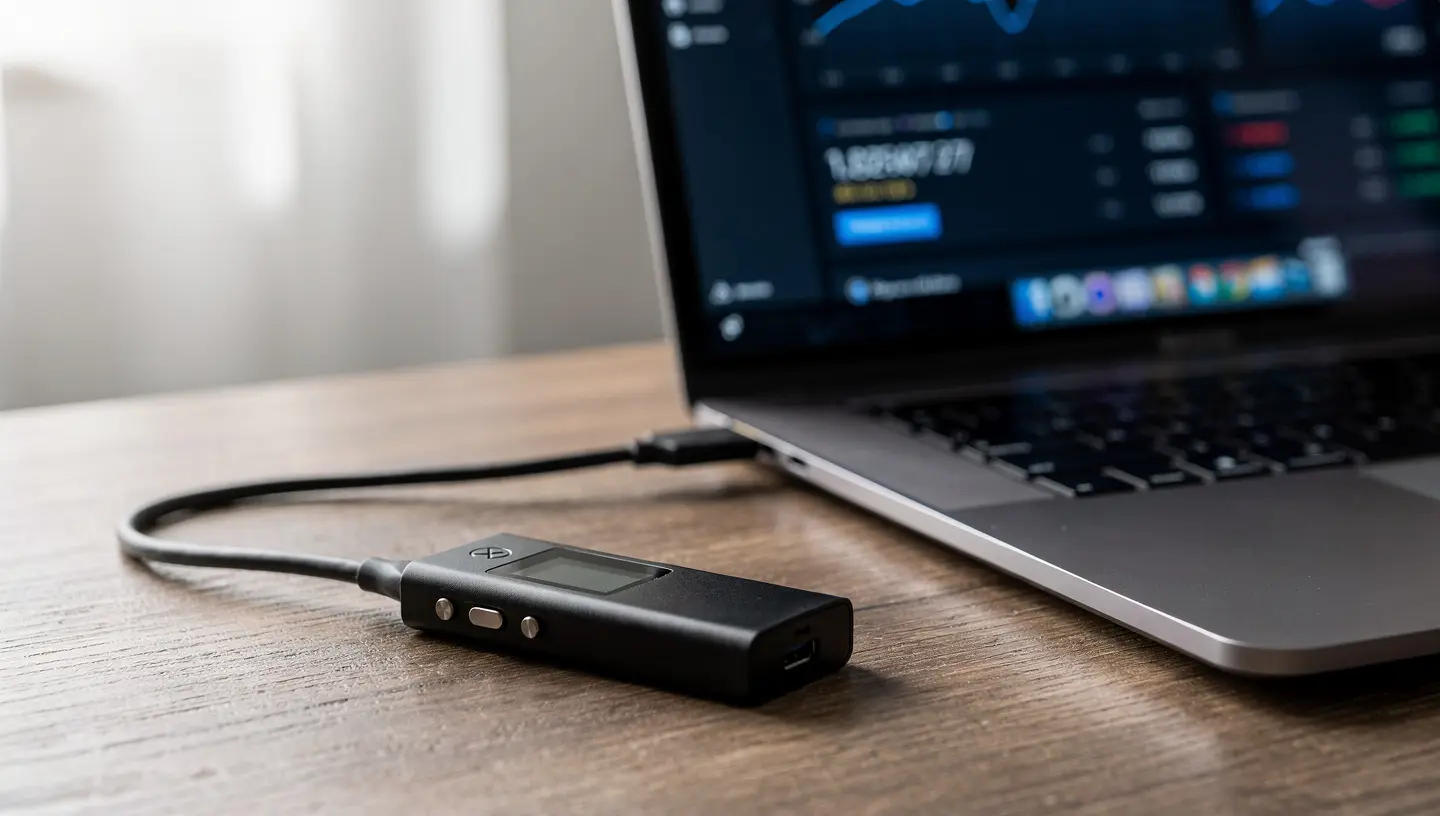
The Ledger Nano S Plus costs around $79 and supports Solana natively. It connects to Phantom for a combined experience: the interface of Phantom with the security of offline key storage.
The one mistake that costs SOL: wrong network on withdrawal
When you withdraw SOL from an exchange to a wallet, you must select Solana as the network. This is the most common way beginners permanently lose funds. Many exchanges list multiple withdrawal networks. If you select Ethereum or BNB Chain when withdrawing SOL, the transaction goes to an incompatible address. In most cases the funds are not recoverable. The exchange cannot reverse it.
Before confirming any withdrawal, verify three things: the network shown on the exchange is Solana, the destination address is a valid Solana address, and the amount is correct. Send a small test transaction first if you are withdrawing a large amount for the first time. The test costs roughly $0.001 in fees and can prevent you from losing your entire holding. For more on how Solana transaction fees work and why they stay so low, the fees guide has the full breakdown.
What to do with SOL after buying: staking and DeFi basics
SOL does not have to sit idle after you buy it. Staking generates passive income while supporting the security of the network. DeFi applications on Solana let you put SOL to work in liquidity pools and lending markets.
Staking SOL on an exchange
The easiest way to stake SOL is through the exchange where you bought it. Coinbase, Kraken and most major platforms offer one-click staking with rewards distributed weekly or monthly. Exchange staking yields typically run around 2.5% to 5% APY. The exchange takes a cut – Coinbase charges 25% of your staking rewards as a service fee, which is why the headline APY is lower than direct staking.
Exchange staking suits buyers who want passive income without managing a wallet. Your SOL stays on the exchange and the exchange handles validator selection on your behalf. The advertised staking APY on exchanges is always lower than direct staking because the exchange deducts its service fee before passing rewards to you.
Staking directly to a validator
Direct validator staking via Phantom or Solflare typically yields 5% to 8% APY depending on the validator chosen. You select a validator from the list in your wallet, delegate your SOL and start earning each epoch (approximately every two days). Your SOL stays in your wallet – you are delegating stake weight, not sending SOL to anyone. Unstaking takes one epoch to process (roughly two days) before the SOL is available again. This staking APY is consistently higher than exchange staking because no intermediary takes a cut of your rewards.
Choose validators with high uptime above 99% and a reasonable commission rate of 1% to 10%. For a technical explanation of how Solana validators work and what they do to earn rewards, the network architecture guide covers the consensus layer in detail.
Liquid staking and DeFi basics
Liquid staking protocols like Marinade Finance (mSOL) and Jito (jitoSOL) let you stake SOL and receive a liquid token in return. The liquid token earns staking rewards automatically and can be used in DeFi as collateral for loans on Kamino, in liquidity pools on Raydium or Orca, or swapped on Jupiter. This gives you staking yield plus the ability to use your staked position in other protocols at the same time.
Liquid staking adds smart contract risk on top of standard staking risk. Start with a small amount if you are new to it.
Dollar-cost averaging vs lump sum: timing your SOL purchase
SOL has been one of the more volatile assets in the top ten by market cap. It traded above $260 in November 2021, fell to $8 in December 2022, recovered to $293 in January 2025, and stood at roughly $93 in March 2026 – a 68% decline from its all-time high. This price history shapes how many buyers approach entry.
Dollar-cost averaging (DCA) means buying a fixed dollar amount on a regular schedule regardless of price – $50 every Monday, for example. You buy more SOL when the price is low and less when it is high, which averages your cost basis and removes the pressure of timing the market. Most exchanges support recurring buy orders that automate this.
Lump sum investing means putting the full amount in at once. Historical data on broad asset classes shows that lump sum outperforms DCA in rising markets roughly two-thirds of the time because assets trend upward over time. In sideways or declining markets, DCA performs better.
For SOL specifically, the combination of high volatility and the current price position – down significantly from the 2025 peak – makes a reasonable case for spreading purchases over several weeks or months rather than a single large buy. Neither approach eliminates the risk of further price declines.
Tax basics for SOL buyers in the US
The IRS treats cryptocurrency as property. Every time you sell, trade or spend SOL, it is a taxable event. This applies to converting SOL to another cryptocurrency, spending SOL on fees, and withdrawing from a staking position.
If you hold SOL for less than one year before selling, the profit is taxed as short-term capital gains at your ordinary income rate. If you hold for more than one year, it qualifies as long-term capital gains, taxed at 15% to 20% for most taxpayers.
Staking rewards are taxed as ordinary income at the fair market value of the SOL on the day you receive them. You owe income tax on rewards even if you do not sell them.
Exchanges operating in the US began issuing Form 1099-DA in 2025, which reports your crypto transactions to the IRS. Keep records of every purchase: date, amount of SOL acquired, price paid, and the exchange used. Without records, the IRS can default your cost basis to zero, treating the entire sale price as taxable gain.
If you buy through a Roth IRA using a Solana ETF, qualified withdrawals in retirement are tax-free. This is a meaningful advantage for long-term holders who have IRA contribution room available. For context on how Solana was built and why its architecture has made it attractive to institutional investors including ETF issuers, the founding story covers the technical decisions that led to the current network.
Frequently asked questions
What is the easiest way to buy Solana for a complete beginner?
Create an account on Coinbase, verify your identity, connect a bank account and use the Simple Buy screen to purchase SOL. The entire process takes under 30 minutes for most people. Once comfortable, switch to Coinbase Advanced Trade for lower fees on future purchases.
What is the cheapest way to buy Solana?
Binance spot trading at 0.1% (or 0.075% with the BNB fee discount) is the lowest fee of the major exchanges. For US users where Binance is not available, Kraken Pro at 0.25% taker fee is the next cheapest option. Avoid the simple buy screens on any platform – they charge 10 to 15 times more than the advanced trading interface.
Can I buy Solana without a crypto exchange?
Yes. The VanEck VSOL and 21Shares TSOL ETFs trade on US stock exchanges. You can buy them through any brokerage account. This gives you SOL price exposure without setting up a crypto account. TSOL also passes staking rewards to shareholders through the fund structure.
What is the minimum amount of SOL I can buy?
On Coinbase the minimum purchase is approximately $2. On Kraken the minimum order is around $10. On Binance trades must meet a minimum quantity of 0.01 SOL. Most exchanges let you buy a fraction of one SOL, so you do not need to buy a whole coin.
Should I leave my SOL on an exchange or move it to a wallet?
For amounts you intend to trade soon or that are small enough you could afford to lose, leaving on an exchange is convenient. For larger amounts held long-term, moving to a self-custody wallet like Phantom or a hardware wallet like Ledger removes the exchange as a risk factor. The general rule: if losing access to the funds would hurt, hold them yourself.
What is the best Solana wallet?
Phantom is the most widely used hot wallet for Solana. It supports SOL, SPL tokens and NFTs and connects to DeFi applications. Solflare is the main alternative with more advanced staking tools. For cold storage, the Ledger Nano S Plus supports Solana natively and can be paired with Phantom for a combined hot and cold setup.
How do I stake Solana after buying?
The easiest method is staking through your exchange. Coinbase and Kraken offer one-click staking with yields of approximately 2.5% to 5% APY. For higher yields of 5% to 8%, move SOL to Phantom or Solflare and delegate directly to a validator. Unstaking takes roughly one epoch (about two days) before the SOL is available to spend or withdraw.
What is a Solana ETF and should I buy one?
A Solana ETF is a fund that holds SOL and trades on a regular stock exchange. VanEck VSOL charges 0.3% per year and tracks spot price. 21Shares TSOL charges 0.21% and passes staking yield to shareholders. Buy an ETF if you invest through an IRA, prefer not to manage a crypto account, or want simpler tax reporting. Buy SOL directly if you want to use it on the Solana network for staking, DeFi or payments.
How do I avoid losing SOL when withdrawing from an exchange?
Always select Solana as the withdrawal network, not Ethereum, BNB Chain or any other option. Verify the destination address character by character. Send a small test transaction before moving a large amount. If the test arrives correctly, proceed with the full amount. An incorrect network selection is almost always permanent and the exchange cannot reverse it.
Do I have to pay taxes on Solana?
In the US, yes. Selling SOL, trading it for another cryptocurrency, or using it to pay fees are all taxable events. Short-term gains (held under one year) are taxed at ordinary income rates. Long-term gains (held over one year) are taxed at 15% to 20%. Staking rewards are taxed as ordinary income when received. US exchanges issue Form 1099-DA from the 2025 tax year.
How does dollar-cost averaging work for buying Solana?
Dollar-cost averaging means buying a fixed dollar amount of SOL on a regular schedule regardless of price. If you buy $100 of SOL every week, you get more SOL when the price is low and less when it is high. Over time this averages your entry price and removes the risk of buying a large amount right before a price drop. Most major exchanges support automated recurring purchases.
What can I do with SOL once I have it?
You can hold it, stake it for passive income (5% to 8% APY via direct validator staking), use it as collateral in DeFi lending protocols like Kamino, pay transaction fees on the Solana network, or trade it for other tokens. Solana has a large DeFi base including Jupiter for swaps, Raydium for liquidity provision, and Magic Eden for NFT trading. To understand what the network actually does and how programs run on Solana, the Solana programs and smart contracts guide covers the architecture in plain terms.